Uruguay
The Uruguayan government advances a metropolitan transport reform based on BRT corridors
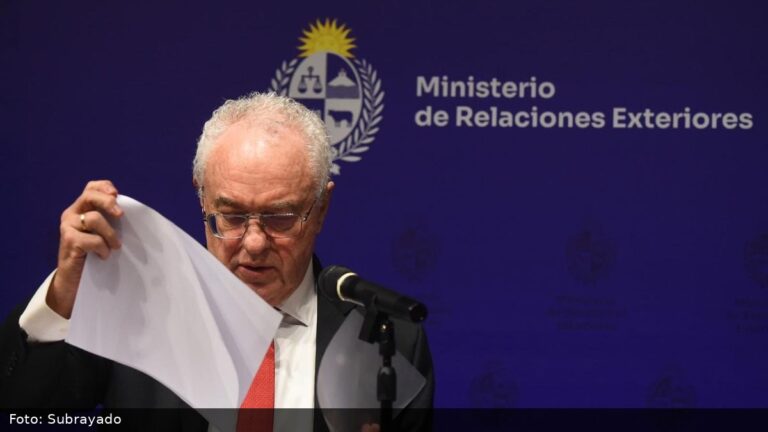
The Metropolitan Transport System Agency is working on a first phase of 50 kilometers with 100 bi-articulated buses, stations and grade separations. According to its director, speaking to la diaria, the option of articulated buses was prioritized over the tram because of costs and similar performance.
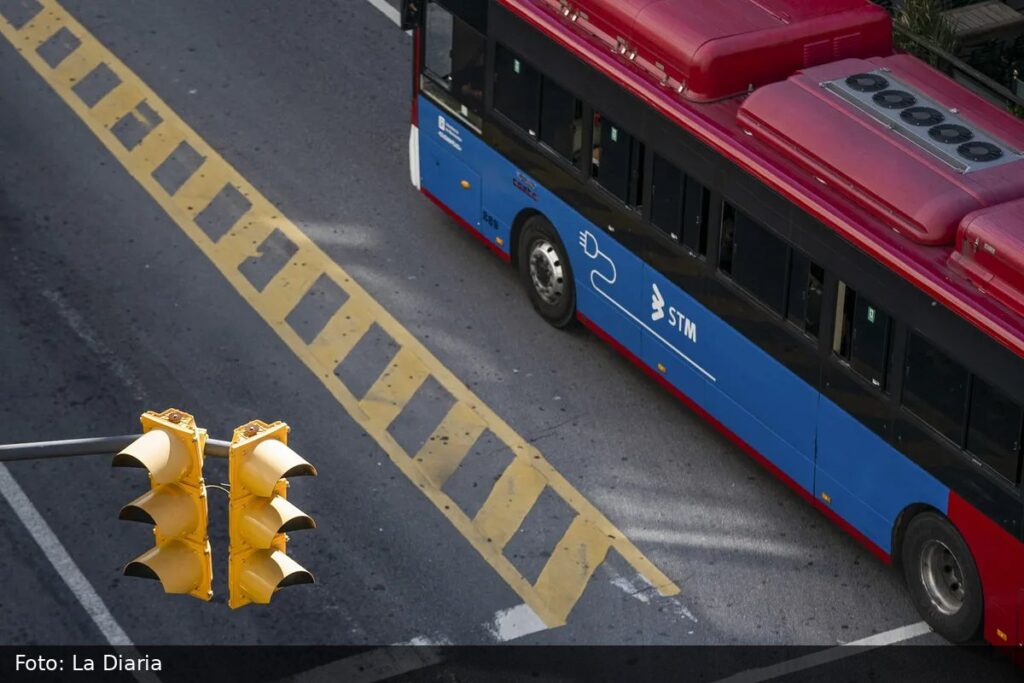
The metropolitan transport reform promoted by the Uruguayan government has been outlined in a first stage centered on two main BRT corridors, with a total fleet of 100 bi-articulated buses, according to Gonzalo Márquez, director of the Metropolitan Transport System Agency (ASTM), who told la diaria.
According to the official, the project aims to improve frequency, travel times and coverage in the metropolitan area. In that context, he said the technical analysis compared the tram alternative with that of high-standard buses and concluded that both can offer similar service levels, although with significant differences in costs. He detailed that the tram’s initial investment is three times higher and its operating cost is 60% higher. Over 30 years, he added, the total difference reaches a 2-to-1 ratio and $1,000 million in favor of the bus-based system.
Márquez told la diaria that the first stage foresees about 50 kilometers of corridor and that the conceptual design would be completed by the end of the year. One of the main routes will head toward El Pinar, while the alignment through 8 de Octubre and Camino Maldonado remains under study, with alternatives toward Zonamérica or Pando. Analyses are also continuing on Ciudad Vieja and on the Tres Cruces hub, where the two lines are expected to converge with direct connection to the passenger terminal.
According to him, the fleet needed for those two corridors would consist of 93 operating units and seven reserve units. Those 100 vehicles would enter the system at the same time as another 100 would be withdrawn, so the total number of buses would not increase. Even so, he said the effect on the network would free up a larger volume of units, which could be around 200, although that will depend on the final operating design.
The official plan is to use those resources to strengthen frequencies and add services in areas that will not be covered by this initial stage, particularly toward the west and north of the metropolitan area. Márquez mentioned, among other corridors, Luis Batlle Berres, Carlos María Ramírez and Millán.
On infrastructure, he explained that on 18 de Julio BRT circulation will be at street level, with an exclusive lane, as will a continuous bike lane along the entire avenue. He also said sidewalks will be maintained and that there will be circulation, probably restricted, for private vehicles.
On Avenida Italia, three grade separations are planned at Luis Alberto de Herrera, Bulevar Batlle y Ordóñez and Bolivia. On 8 de Octubre, meanwhile, two more are planned, at Centenario and at Propios. As he told la diaria, at all those points the BRT will pass underneath and will have fully accessible stations, including elevators and escalators.
Márquez added that Avenida Italia is divided into two sections: one between Tres Cruces and Portones, where three lanes per direction would be maintained, and another between Portones and Barradas, where alternatives are being studied to keep two lanes per direction alongside the exclusive BRT track.
As for the timeline, he told la diaria that the goal is to begin developing executive projects between October and November and start works around mid-2027. The official intention is to tender with executive projects prepared by the agency itself in order to limit changes during construction.
The ASTM director also said the intervention is not intended to open new areas for urban expansion, but rather to act on already consolidated corridors such as 8 de Octubre, Camino Maldonado, Avenida Italia and Giannattasio, in order to make public transport more attractive than car use.
Sources
About this note. Written by El Notero with the assistance of artificial intelligence, based on what was published by the cited outlet. El Notero did not conduct its own reporting on this event.