Uruguay
Fratti Defended Colonization and Rejected ARU Criticism After Expo Prado
The Minister of Livestock responded to Rafael Ferber over the National Colonization Institute and the sanitary strategy against ticks. He also stressed that government policies are based on the mandate that emerged from the ballot box.

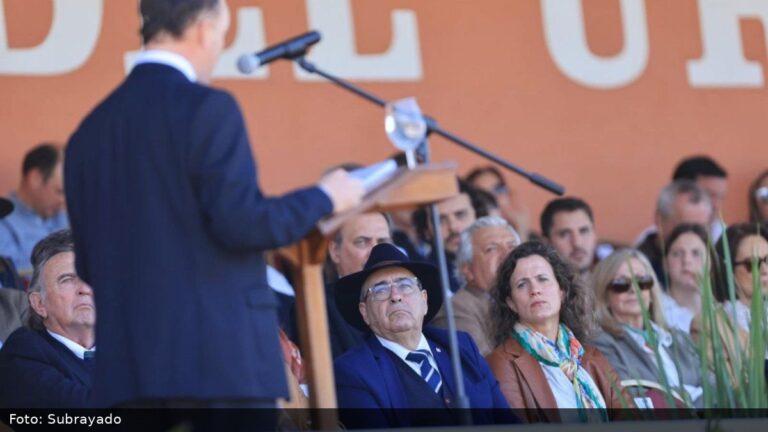
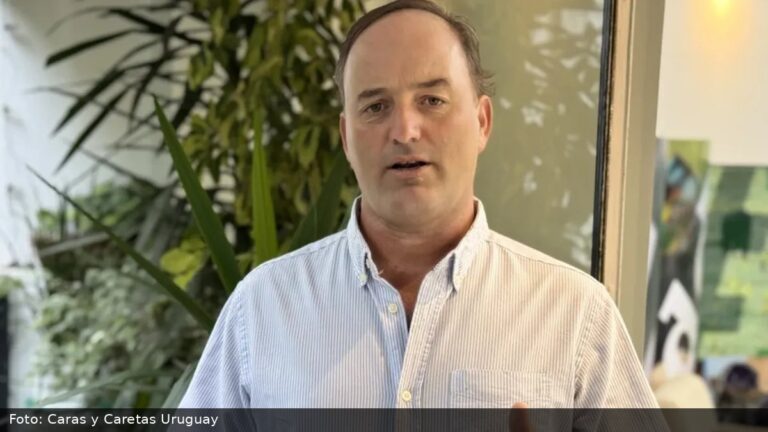
The closing of Expo Prado once again exposed differences between the government and the Rural Association of Uruguay on key issues for the agricultural sector. According to Caras y Caretas Uruguay, the Minister of Livestock, Agriculture and Fisheries, Alfredo Fratti, responded to remarks by ARU president Rafael Ferber and defended both the continuity of the National Colonization Institute and the measures applied against ticks.
One of the main disputes centered on Colonization. Ferber had called for a review of the agency’s role and legal framework, in addition to questioning the continued purchase of land with public funds under the current scheme. Fratti said he was open to discussing changes, but drew a line: he said the government is not willing to consider shutting down the institute and maintained that the tool must continue to exist.
According to Caras y Caretas Uruguay, the minister framed that defense within one of the commitments assumed by the Executive Branch, which предусматриes allocating 25,000 hectares for colonization, with a special focus on the dairy sector. Fratti said 11,600 hectares have already been purchased and paid for. He also indicated that another 13,500 hectares of the roughly 395,000 hectares administered by the agency still do not have a final allocation because they remain in the selection process, although in the meantime they are being used for grazing by local producers.
Fratti also said that Colonization’s role as an instrument for access to land and rural development was backed in the elections and linked that policy to the mandate received by the government.
The other point of contention was the fight against ticks. Ferber had acknowledged, according to the Uruguayan outlet, the minister’s and the ministry’s commitment, but questioned whether after a year and a half in office there was still no sanitary strategy capable of generating trust and support among producers.
Fratti responded forcefully and defended the National Tick Control Plan, which was turned into government policy in August 2025. Among the measures, he mentioned the increase in hemovacine production at the Miguel C. Rubino Veterinary Laboratory, which rose from 180,000 to 300,000 doses, as well as the purchase of another 60,000 vaccines from a private laboratory. He also noted that they are distributed free of charge to family producers and participants in the Procría program.
According to Caras y Caretas Uruguay, the minister also backed the repeal of the decree that allowed the movement of cattle with “tick shell,” along with the rollout of digital livestock dispatches and traceability of the treatments applied to animals. He added that new vaccines are under study with the participation of the Pasteur Institute, the Faculty of Veterinary Medicine and private laboratories.
In his response to the ARU, Fratti also added a political definition. He said governments must act in accordance with what they proposed to the public and stated that decisions are not made by pressure groups, however relevant they may be.
Sources
About this note. Written by El Notero with the assistance of artificial intelligence, based on what was published by the cited outlet. El Notero did not conduct its own reporting on this event.