Uruguay
Civila said the Mides expanded assistance for people living on the streets and is planning new housing solutions
The Minister of Social Development said that by the end of August, 14,698 people had been assisted nationwide. He also defended changes to the transfer system and addressed the dispute over salary delays affecting outsourced workers.

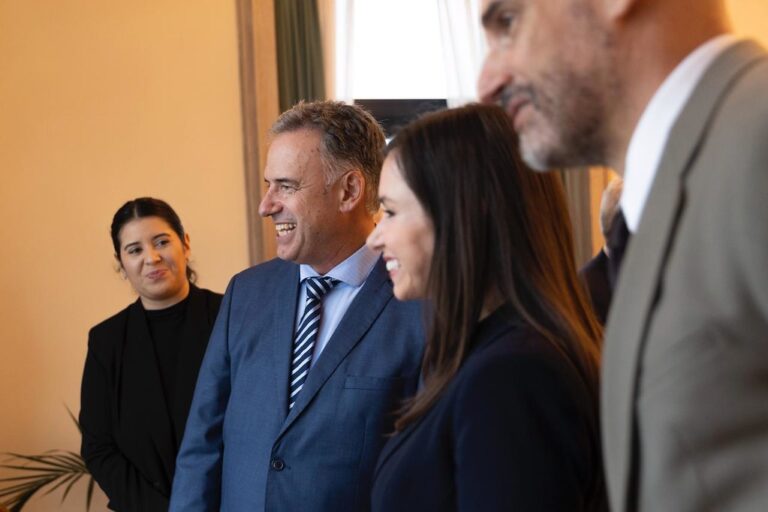
The Minister of Social Development of Uruguay, Gonzalo Civila, said that by the end of August the State had assisted 14,698 people living on the streets nationwide and noted that the official forecast is to reach several thousand more during this year. In an interview with Panorama informativo on la diaria Radio, he linked that increase to an expansion of the assistance system.
According to him, when he took office there were 5,500 shelter places and that figure grew to about 9,000. He added that in the interior, except for five departments, there were no responses outside the winter plan, while now there is 24-hour coverage in all departments of the country.
Civila said that, based on citizen reports and the territorial work of the teams, the ministry is detecting sectors of the city where the number of people living on the streets has fallen noticeably. Even so, he acknowledged that some of those who do not accept entering the system move to less visible places.
The minister framed the situation as a preexisting emergency and said the government is maintaining emergency responses while trying to deploy long-term measures. Among them, he mentioned the goal of having 1,800 people access housing solutions with support in 2027 and for that figure to reach 3,000 in 2028.
He also noted that there are about 15 groups with expectations of accessing collective housing, made up of people who choose to live together, and said the ministry is also working with the Federación Uruguaya de Cooperativas de Vivienda por Ayuda Mutua to strengthen cooperatives aimed at people who have gone through street homelessness or other forms of extreme vulnerability.
In another part of the interview, Civila defended the unification of transfers included in the Rendición de Cuentas, approved in the Chamber of Deputies and under discussion in the Senate. He indicated that the text was modified during the parliamentary process and that the conditionality ratio changed from 20%-80% to 40%-60%, with 40% conditional. He added that it was proposed that the mechanism operate through electronic payment, without that necessarily implying the use of the Tarjeta Uruguay Social.
According to the minister, statements were introduced into the public debate that do not reflect the system’s current operation. He said there is no millimetric control over household spending and that the use of benefits is channeled through a network of affiliated businesses. He also questioned criticism from actors who, he said, were part of the previous government and later maintained and even strengthened that policy.
Asked about the protest by outsourced Mides workers, whose tent remains set up in front of the Torre Ejecutiva over claims linked to salary delays, Civila said it is a structural problem. He recalled that on September 1 a negotiation table was opened with the Sindicato Único de Trabajadores de Instituciones Gremiales y Afines and said the ministry is seeking a long-term solution in dialogue with other agencies of the Executive Branch, including the MEF and the MTSS.
The minister stressed that salary delays and the violation of labor rights affect the quality of public policies and assured that the goal is to prevent these situations from dragging on.
Sources
About this note. Written by El Notero with assistance from artificial intelligence, based on what was published by the cited outlet. El Notero did not do its own reporting on this event.