Uruguay
A specialist said Orsi reaffirmed Uruguay’s stance of backing Argentina’s claim over the Malvinas
Internationalist Magdalena Bas said the Uruguayan president’s remarks indicate continuity in Uruguay’s historical position. She noted that Montevideo maintains its support for Argentina’s claim and does not endorse the islanders’ self-determination.
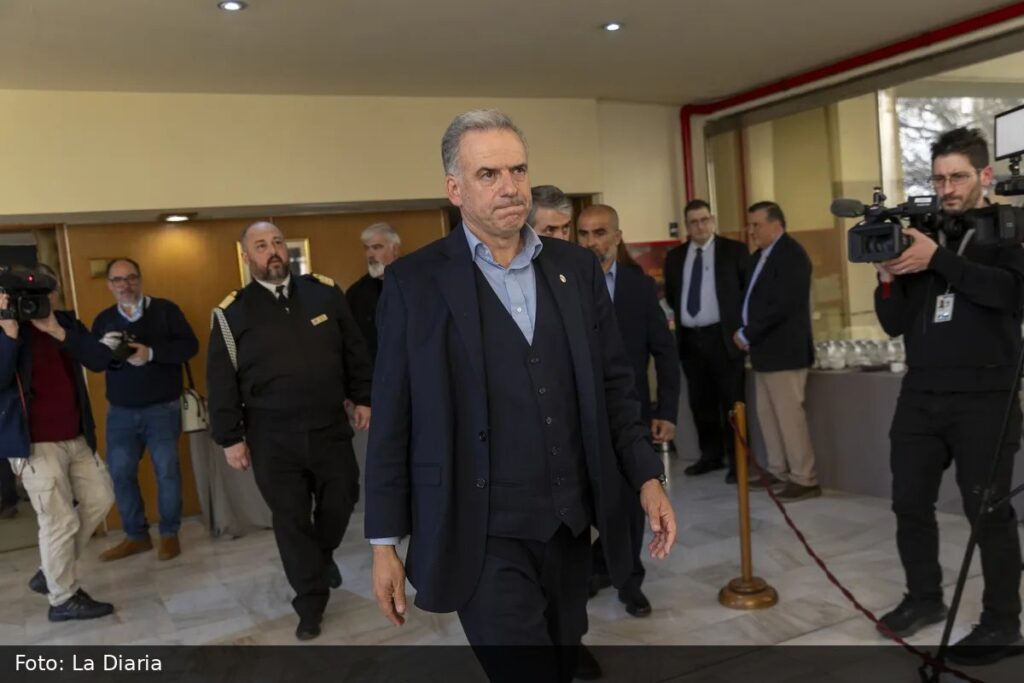
Doctor of International Relations Magdalena Bas said, in statements to La Diaria, that Uruguayan President Yamandú Orsi’s remarks on the Malvinas Islands show that Uruguay will maintain its historical position of support for Argentina’s claim.
According to her, that stance is based on the principle of territorial integrity, historical precedents and geographic proximity. In that context, she noted that Uruguay does not support the British position based on the self-determination of the islands’ inhabitants.
Bas added that this foreign policy line has other implications. As an example, she mentioned that Uruguay does not recognize Kosovo because it considers that case to bear similarities to the Malvinas issue. She also recalled that within Mercosur there were statements of support for Argentina that, although not binding in legal terms, do politically commit the member states.
In that sense, she specified that the current concrete limitation is the ban on vessels flying the Falklands flag from entering Uruguayan ports, but not ships that have origin, destination or stopover in the islands under other flags. For the academic, that scheme does not alter Uruguay’s historical position.
Asked about the controversy over an alleged submarine cable project between the islands and Montevideo, Bas told La Diaria that, after Orsi’s denial, she sees no signs of a change of course. In her view, the president was categorical and made it clear that this is a sensitive matter for Uruguayan foreign policy.
The specialist also considered the timing relevant, in a context in which, she said, Argentine foreign policy has shown changes or swings on the issue. At the same time, she stressed that Uruguayan support does not depend on the government in office or on commercial considerations with the United Kingdom, but rather responds to a state policy.
Bas also said that Uruguay could adopt stricter internal measures regarding vessels linked to the islands, although she estimated that this does not seem to be among the country’s priorities today. On the economic impact of port services, she assessed that the gain for Uruguay would be marginal.
Finally, she noted that the broader debate also involves control of natural resources, particularly through hydrocarbon exploitation. There, she said, the issue of sovereignty is central to determining who has the authority to authorize those activities.
Sources
About this note. Written by El Notero with the assistance of artificial intelligence, based on what was published by the cited outlet. El Notero did not conduct its own reporting on this event.