Uruguay
Petit defended the scope of the INDDHH’s antisemitism group and distanced himself from directors’ personal opinions
The new president of the National Human Rights Institution said that questioning a state’s policies does not in itself amount to discrimination. He also said that Marcos Israel’s remarks were made in a personal capacity.
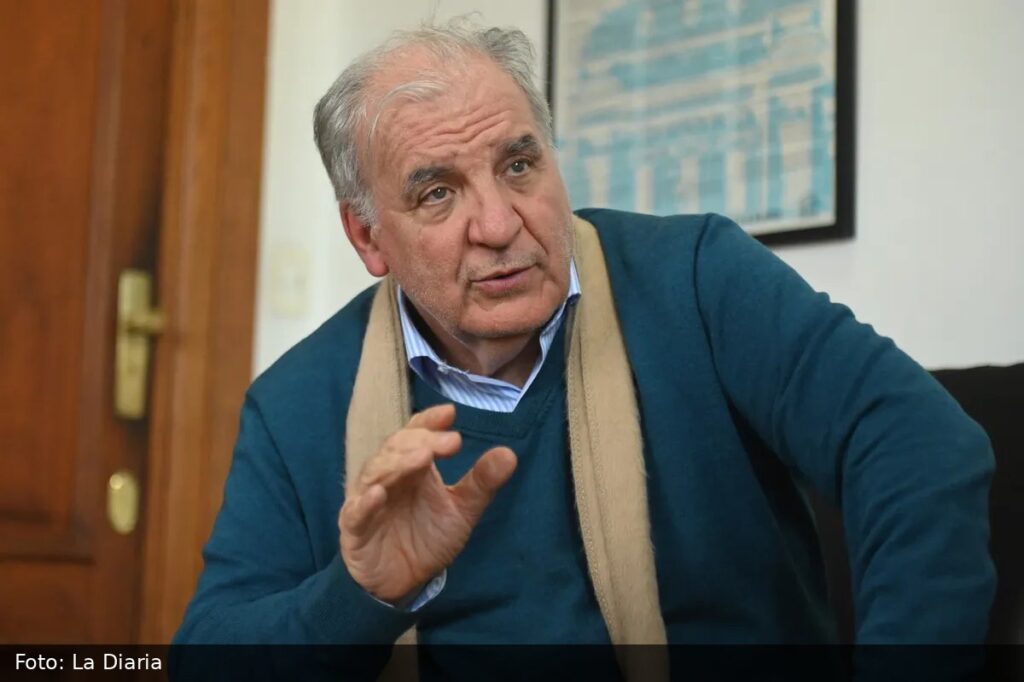
The president of the National Human Rights Institution and Ombudsman’s Office, Juan Miguel Petit, addressed the controversy generated by the agency’s antisemitism working group and said its mandate is limited to studying that form of discrimination in Uruguay, without intervening in debates on international politics.
According to la diaria, Petit said that director Marcos Israel’s remarks on the issue were made in a personal capacity. In that context, he stressed that the law grants autonomy to directors and that each one must answer for their own opinions, while the institution can only take a position on matters within its remit.
Petit said that international issues fall outside the INDDHH’s specific area of action. Even so, he acknowledged that Israel’s statements prompted criticism from social organizations during the human rights assembly held in late August in Maldonado.
Regarding the working group, he explained that it was created following complaints and testimony linked to antisemitic expressions in Uruguay, including inscriptions, threats and aggressive remarks toward adolescents. He said the goal is to assess educational, cultural and legislative measures to prevent that form of discrimination.
In that line, he said that criticizing the conduct or decisions of a state does not in itself constitute an act of racism or discrimination. According to la diaria, he insisted that the group was not conceived to discuss the events of October 7, 2023, the response of the government of Israel or other controversies in the Middle East, because he believes that debate goes beyond the institution.
Petit also said the intention is to maintain a broad forum for exchange, with the participation of different organizations and viewpoints, and that the goal is to produce a final document that can contribute to the public discussion on antisemitism and non-discrimination.
In the interview, he also reviewed other INDDHH lines of work. Among them, he mentioned a group on adoptions that is close to concluding, progress with INAU on the so-called unauthorized departures of children and adolescents from protection centers, and follow-up on initiatives linked to mental health and the project for a commissioner for children within the parliamentary sphere.
Sources
Sobre esta nota. Redactada por El Notero con asistencia de inteligencia artificial, a partir de lo publicado por el medio citado. El Notero no hizo reporteo propio sobre este hecho.