World
Merz faces a crucial test in two regional elections as pressure mounts inside the CDU
The German chancellor heads into Sunday’s votes with weak polling and growing doubts about his future. POLITICO Europe reported that he has already taken steps to contain a possible internal backlash.
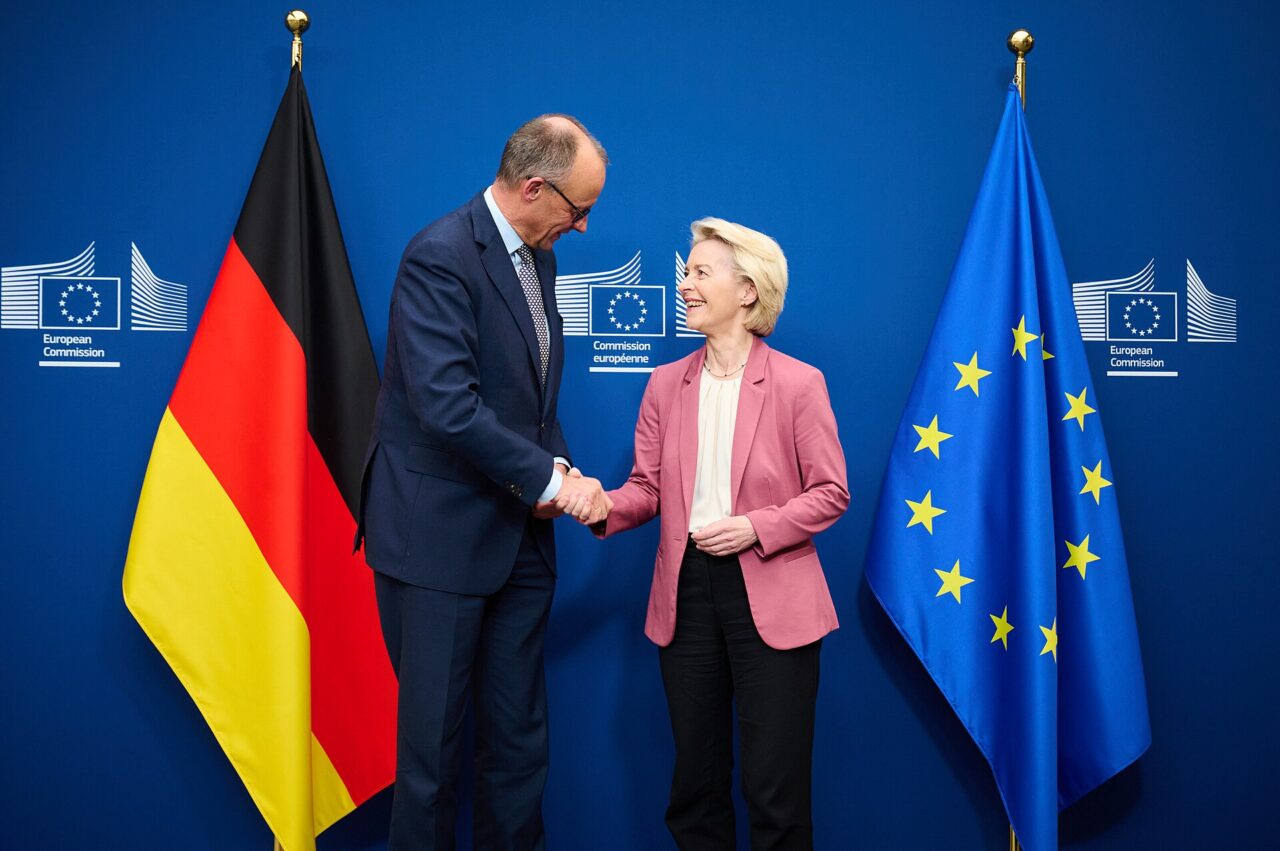
Friedrich Merz is heading into a pivotal Sunday in Germany, with regional elections in Mecklenburg-Western Pomerania and Berlin expected to deepen questions about whether he can remain both chancellor and leader of the Christian Democratic Union, or CDU.
According to POLITICO Europe, Merz is already bracing for a fight over his political survival. After the CDU’s heavy defeat to Alternative for Germany in Saxony-Anhalt earlier this month, the party now risks another major setback in the country’s northeast. Polls cited by the outlet put the CDU at just 7 percent in Mecklenburg-Western Pomerania, leaving it close to the 5 percent threshold needed to enter the state parliament.
A conservative official quoted anonymously by POLITICO Europe said that if the CDU fails to make it into that legislature, the party could face an open internal upheaval.
In Berlin, where voters will also go to the polls on Sunday, the picture is somewhat less severe but still troubling for the conservatives. Polling cited by the publication shows the CDU at about 20 percent, narrowly behind Die Linke. That would be eight points below the party’s result in the last Berlin election and could cost it control of the city government it currently leads.
Facing that risk, Merz arranged a meeting with CDU leaders for Sunday before polls close, aiming to assess support and argue that he has a plan to reverse the party’s fortunes, POLITICO Europe reported. He also canceled a speech he had been scheduled to deliver at the United Nations General Assembly on Wednesday so he can stay in Berlin and deal with the domestic fallout.
In recent days, the chancellor has tried to frame his leadership around the need for stability at a volatile moment in Europe. At a CDU campaign event in Berlin, he argued that Germany is expected to help keep the continent stable. In the same vein, all eight CDU state premiers issued a public letter on Wednesday backing him and stressing the need for a stable federal government with its own majority in the Bundestag. Among the signatories was Hendrik Wüst, the premier of North Rhine-Westphalia, whom POLITICO Europe described as the most likely replacement for Merz if his position deteriorates further.
The outlet also reported that Merz has begun making modest adjustments in tone and policy as he tries to respond to voter discontent and demands from state leaders. He signaled greater openness to addressing soaring fuel prices and softened his stance on early retirement for people who have paid into the pension system for 45 years.
At the same time, he has acknowledged that he needs to connect more effectively with voters and sound less like a stern enforcer. Even so, many conservatives remain unconvinced that such a limited shift is enough to rescue him. Some of the sharpest criticism has come from the youth wing of the conservative bloc: Clara von Nathusius, one of its leaders, told German public television that Merz is part of the problem and that, in her view, they can no longer keep winning elections with him as chancellor.
Sources
About this piece. Written by El Notero with AI assistance, from reporting published by the outlet cited above. El Notero did no original reporting on this story.