Paraguay
A five-year moratorium on new universities and Law and Medicine programs is being promoted in the Senate
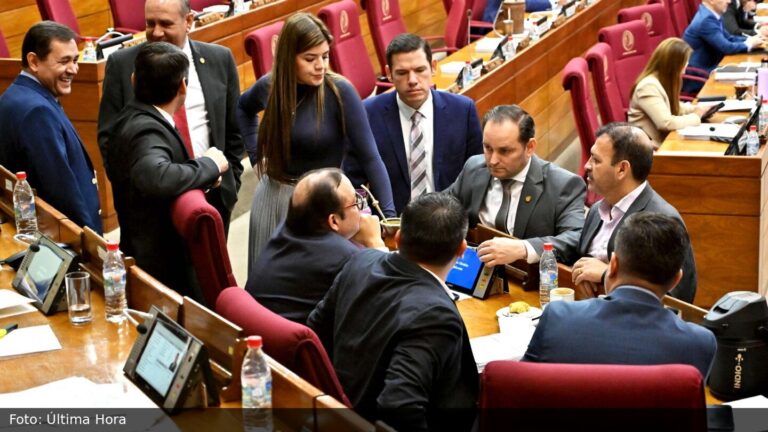
A group of senators has introduced a bill to halt for five years the creation of new universities in Paraguay and the approval of new offerings in two sensitive areas. The proposal also provides for a public registry of degree programs and graduates.

A bill introduced in the Senate proposes suspending for five years the receipt, processing and approval of new requests to create public or private universities in Paraguay. According to ABC Color, the restriction would also apply to Law and Medicine programs.
During that period, the National Council of Higher Education (CONES) would not be able to authorize new undergraduate programs in those two areas or new faculties, academic units, branches, campuses, sub-campuses or extensions intended to offer them. The initiative was introduced on September 2, officially entered on September 16 and referred to the Senate’s Education and Culture committee.
According to ABC Color, the text was promoted by Celeste Amarilla, Esperanza Martínez, Rafael Filizzola, Rubén Velázquez, Líder Amarilla, Éver Villalba, Ignacio Iramain and Eduardo Nakayama. In the statement of reasons, the lawmakers argue that the expansion of higher education must be accompanied by verifiable conditions of quality, relevance, transparency and sustainability.
The initiative notes that there are currently 58 universities created by law: 10 public and 48 private. It also warns about the difference between authorized and accredited programs. According to ANEAES data cited in the bill and reproduced by ABC Color, in April 2026 there were 191 authorized Law degree programs and 33 accredited ones.
In Medicine, the bill stresses that opening new programs requires resources that go beyond classrooms, such as teachers, laboratories, libraries, simulation spaces, research, hospitals, practical training sites and patients. Still according to the data included in the proposal, there are 43 active medical programs in 25 universities; 22 of those institutions have accreditation in the National Model and three also have accreditation in the ARCU-SUR system.
The text makes clear that the moratorium would not mean closing universities or eliminating existing degrees. Students would be able to continue their studies and the institutions already authorized would remain able to update curricula, incorporate technology, conduct research and process accreditations or renewals.
In addition, an exception is предусмотрed for university creation projects that have already formally entered either chamber of Congress and have an open file at the time the eventual law enters into force. In those cases, they may continue, but they will need a favorable and binding opinion from CONES.
The proposal also creates a National Public Registry of Degree Programs and Graduates, to be jointly administered by CONES and the Ministry of Education and Sciences. That registry would have to be public, free and permanent, and include data on the legal and academic status of each educational proposal, as well as information on authorization, operation, accreditation, corrective measures and a list of graduates by program and year.
According to ABC Color, the sponsors seek to use the moratorium period to evaluate and accredit existing programs, improve regulation, strengthen quality assurance mechanisms and make available information more transparent. At the end of that period, CONES and ANEAES would have to submit a public report to Congress on the results of the process and the conditions for once again authorizing new universities or expanding Law and Medicine programs.
The debate comes amid questions about university training, especially after the case of former senator Hernán David Rivas, who resigned his seat amid a case over an alleged fake law degree, as ABC Color recalled. The newspaper also noted that two years ago the Senate rejected a bill that sought to suspend new Medicine programs for five years.
Sources
About this note. Written by El Notero with assistance from artificial intelligence, based on what was published by the cited outlet. El Notero did not do its own reporting on this event.