Uruguay
The National Party Will Summon Carlos Negro to Parliament Over a Report on Organized Crime in Uruguay
The opposition wants the interior minister to explain data presented to Mercosur about Brazilian groups and the presence of foreign networks. It also plans to ask about the public security plan and the role of the National Drug Board.
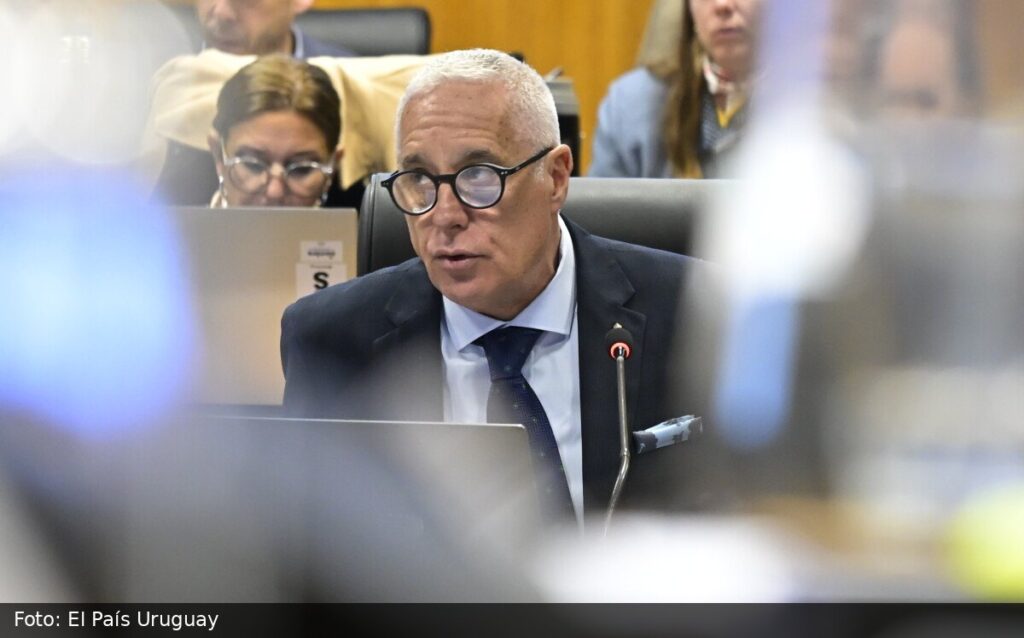
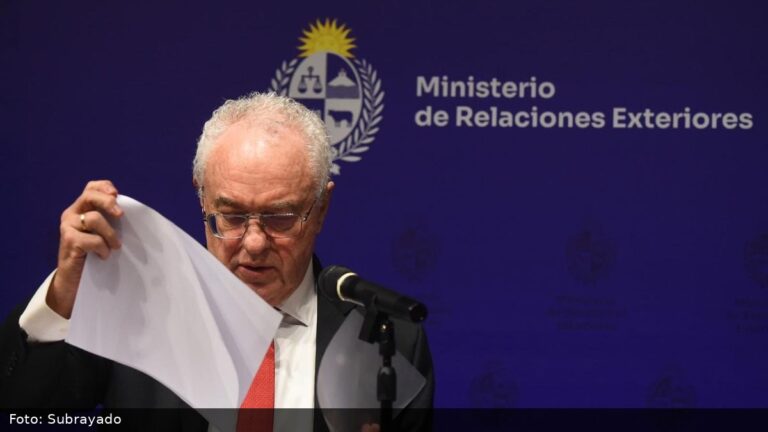
The National Party decided to summon the Minister of the Interior, Carlos Negro, to the Security and Coexistence Committee of the Chamber of Representatives to ask him for explanations about the state of public security, particularly after a report from that ministry presented to Mercosur and published by El País.
According to that report, Brazilian criminal organizations, including the Prime Capital Command, functioned as a “criminal school” for Uruguayan actors. National Party lawmaker Pablo Abdala, who promoted the summons and confirmed to El País that it has already been approved, said the information is “quite new” and that they will seek to learn more precisely the scope of the issue.
Abdala also said they will ask for details about what emerged regarding the presence of Albanians, Montenegrins and Serbs in Uruguay. According to what he told El País, although the minister later downplayed that point, his response did not seem “very convincing or categorical” to him.
According to El País, the opposition will also use the appearance to review the implementation of the National Public Security Plan, presented in March this year. Abdala also questioned the fact that the National Drug Board was given, in his view, new powers linked to drug enforcement and police tasks, something he considered an encroachment on the Interior Ministry’s authority.
The official report was presented by the Police Penitentiary Research and Analysis Unit at the latest meeting of the Mercosur Specialized Working Group for the Fight Against Criminal Organizations. There, the influence of these factions inside and outside the prison system was described.
One of the data points noted in the report comes from police monitoring of the PCC in Uruguayan prisons since 2023. Still according to what was published by El País, on May 11, 2025 a search at the Libertad prison led to the seizure of a cellphone with communications between members of that organization. On that device, a WhatsApp group called “Sistema do Uruguay” was detected, made up of eight members.
The analysis of that phone, the report cited by El País adds, provided information on active members, connections, areas of influence inside and outside prisons, as well as codes and internal conduct rules of the PCC.
The document also states that there are 420 foreigners among 16,872 people deprived of liberty in Uruguay, equivalent to 2% of the total. Of that group, 190 are Brazilian and 74 are Argentine. In addition, among 88 members of Brazilian organizations imprisoned in the country, 51 are linked to the PCC, 19 to Os Manos, nine to Primeiro Comando da Fronteira, seven to Os Tauras and two to Bala Na Cara.
The report clarifies that no operations have been detected so far that prove direct activity by those organizations within the prison system. However, the Police warns that those factions have operated as a “criminal school” and that the dynamics of border groups have a direct impact on prisons.
The presentation also identifies three sensitive points along the dry border: Rivera-Santana do Livramento, Aceguá-Aceguá and Chuy-Chuí. There, according to the official document cited by El País, small Uruguayan and Brazilian organizations are replicating methods of action used by major cartels such as Os Manos and the PCC for drug trafficking.
Sources
About this note. Written by El Notero with the assistance of artificial intelligence, based on what was published by the cited outlet. El Notero did not do its own reporting on this event.