Uruguay
The Colorado Party debates its origins and aims to mark the bicentennial of its founding process in 2028
While Blancos and Colorados prepare to mark the 190th anniversary of the Battle of Carpintería, leaders in the Colorado Party say its history began before 1836 and are considering a major commemoration for 2028.
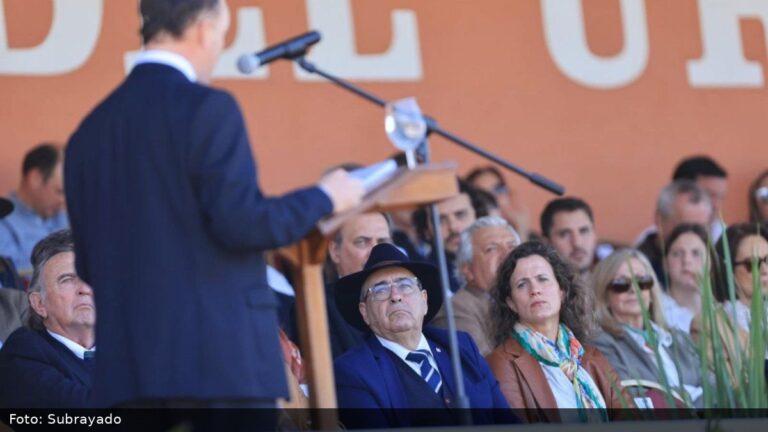
The Colorado Party has been revisiting its own historical timeline and plans to celebrate in 2028 the bicentennial of what it defines as its “founding process,” according to El País. The debate comes on the eve of a new anniversary of the Battle of Carpintería, traditionally regarded as the starting point of Uruguay’s traditional political colors.
On September 19, representatives of the Colorado Party and the National Party will take part in Durazno in a commemoration of the 1836 battle, when the forces of Manuel Oribe, then president, faced those of Fructuoso Rivera, who had risen up against the government. In that episode, the Oribistas used a white banner with the inscription “Defenders of the laws,” while Rivera’s supporters identified themselves with the red lining of their ponchos.
According to El País, although Carpintería serves as a symbol of origin for both currents, the two parties have held different views on the centrality of that episode and on which date should be taken as the party’s birth. The National Party marked its 190th anniversary this year on August 10, in remembrance of Oribe’s decree establishing the use of the white banner.
By contrast, Colorado Party secretary general Andrés Ojeda told El País that his party did not replicate a similar celebration because it believes its “190 were a long time ago.” He said the internal discussion involved party authorities, historians and activists.
Former president Julio María Sanguinetti told El País that, in the Colorado case, there was not yet a banner in the early years, but rather a political space associated with Rivera that had been taking shape earlier in a long-standing rivalry.
Ojeda also told El País that the party’s Historical Heritage Deputy Secretariat was consulted and that Luis Hierro López worked to organize the debate, with contributions from Sanguinetti and historian Marta Canessa.
According to that review, within Coloradismo there are those who place antecedents as far back as 1817, when Rivera took command of Artiguista troops, or in 1820, when he agreed to surrender to the Portuguese on the condition of preserving an Eastern regiment. That decision is upheld by Colorado sectors as part of an “ethic of responsibility,” insofar as that local force was later considered relevant to the uprising against the Brazilian occupation.
Hierro told El País that he considers 1820 a “key date” for finding the “roots of Coloradismo,” because of the formation of the Rivera group, although he also pointed to 1828 as another possible year for a commemoration, based on Rivera’s conquest of the Misiones and the documentary recognition of a “Frutos party.”
Still according to El País, Hierro said that different sources and figures of the time, including Thomas Hood and Manuel Lavalleja, were already speaking then of the “Frutos party.” For the leader, it was a process that culminated in 1836 with the naming of the banner, while the Colorado Party as such began to be recognized after the Guerra Grande.
The former vice president added that the debate remains open and that they have not yet moved forward with the concrete design of the commemoration, although he anticipated a “very important celebration” of the bicentennial of that founding process.
On September 19, 190 years will have passed since the Battle of Carpintería and both parties are calling activities in Durazno. El País also recalled that in 1986, on the 150th anniversary of that clash, Blancos and Colorados held joint commemorative events, in which then vice president Enrique Tarigo defined that episode as a fact that symbolizes the birth of the country’s two major parties.
Sources
About this note. Written by El Notero with assistance from artificial intelligence, based on what was published by the cited outlet. El Notero did not conduct its own reporting on this event.