World
Brazil Is Among the Few Countries With Such a Broad Special Jurisdiction for Officials
A Folha de S.Paulo review of 86 countries placed Brazil among the exceptions because of the breadth of offices covered by that regime. The debate regained momentum amid the internal crisis at the Supreme Federal Court.
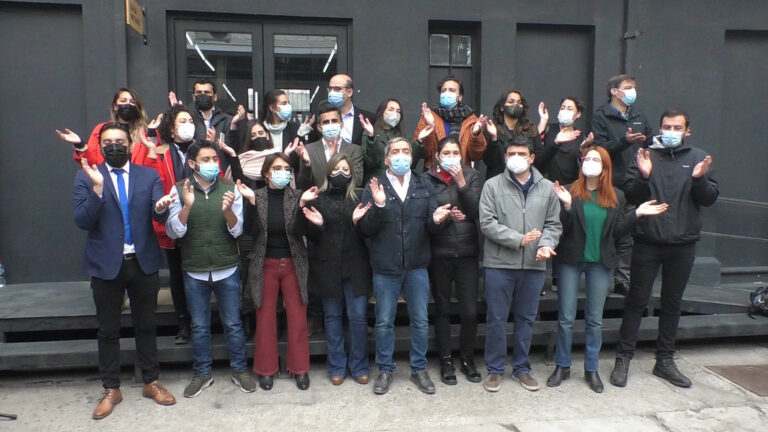
Amid the crisis at Brazil’s Supreme Federal Court, the scope of special jurisdiction returned to the center of institutional debate. According to an analysis published by Folha de S.Paulo, it is a little-used mechanism in the Americas and Europe, and almost no country applies it to such a broad range of offices as Brazil does.
In Brazil, the STF must hear cases involving the 513 deputies, the 81 senators, the president of the Republic, the vice president, cabinet ministers and members of superior courts. The Superior Court of Justice handles cases involving governors, appellate judges, members of regional courts and members of the Public Prosecutor’s Office who act before higher courts. In addition, some judges and prosecutors are tried by federal regional courts, while mayors and most prosecutors and attorneys fall under state courts.
According to a Chamber of Deputies study cited by Folha de S.Paulo, in 2021 there were nearly 60,000 people in 40 types of offices across the three levels of government and the three branches covered by special jurisdiction by virtue of office.
The newspaper’s review of 86 countries found that 60% do not provide for any such mechanism. That group includes the United States, Mexico, Argentina, the United Kingdom, Germany, India and Japan. Another 18% reserve it only for top authorities; 11% extend it to senior authorities and lawmakers; and just eight countries, equivalent to 9%, also apply it to local authorities, such as mayors and governors. In Europe, according to that analysis, only Spain has a system as broad as Brazil’s.
The publication also stressed that special jurisdiction is not the same as parliamentary immunity, which exists in almost every country. Even in countries without special jurisdiction, legislative authorization is often required to move forward with criminal proceedings, investigations or arrests against lawmakers or senior authorities.
Among the critical voices cited by Folha de S.Paulo, Orlando Belém, a prosecutor with the Public Prosecutor’s Office of Rio de Janeiro, said the Brazilian model retains a protective logic and that its breadth pushes the STF to intervene increasingly in political matters. In his view, concentrating so many cases in a single instance with no appeal increases judicial politicization.
The report also included a different view from political scientist Zachary Elkins, of the University of Texas at Austin, who said a mechanism of this kind can help safeguard the independence of the Legislative and Judicial branches from possible abuses by the Executive branch. According to him, the problem lies in balancing that protection with the institutional effects that such an extensive jurisdiction can generate.
Sources
About this note. Written by El Notero with the assistance of artificial intelligence, based on what was published by the cited outlet. El Notero did not conduct its own reporting on this event.