Miami
Alex Bores launches a $30 million push to unify Democrats around AI policy
The New York state lawmaker unveiled Who Decides, a new organization aimed at getting Democratic candidates onto a shared artificial intelligence agenda by 2028. The launch comes as AI is becoming a larger political fight in both parties.
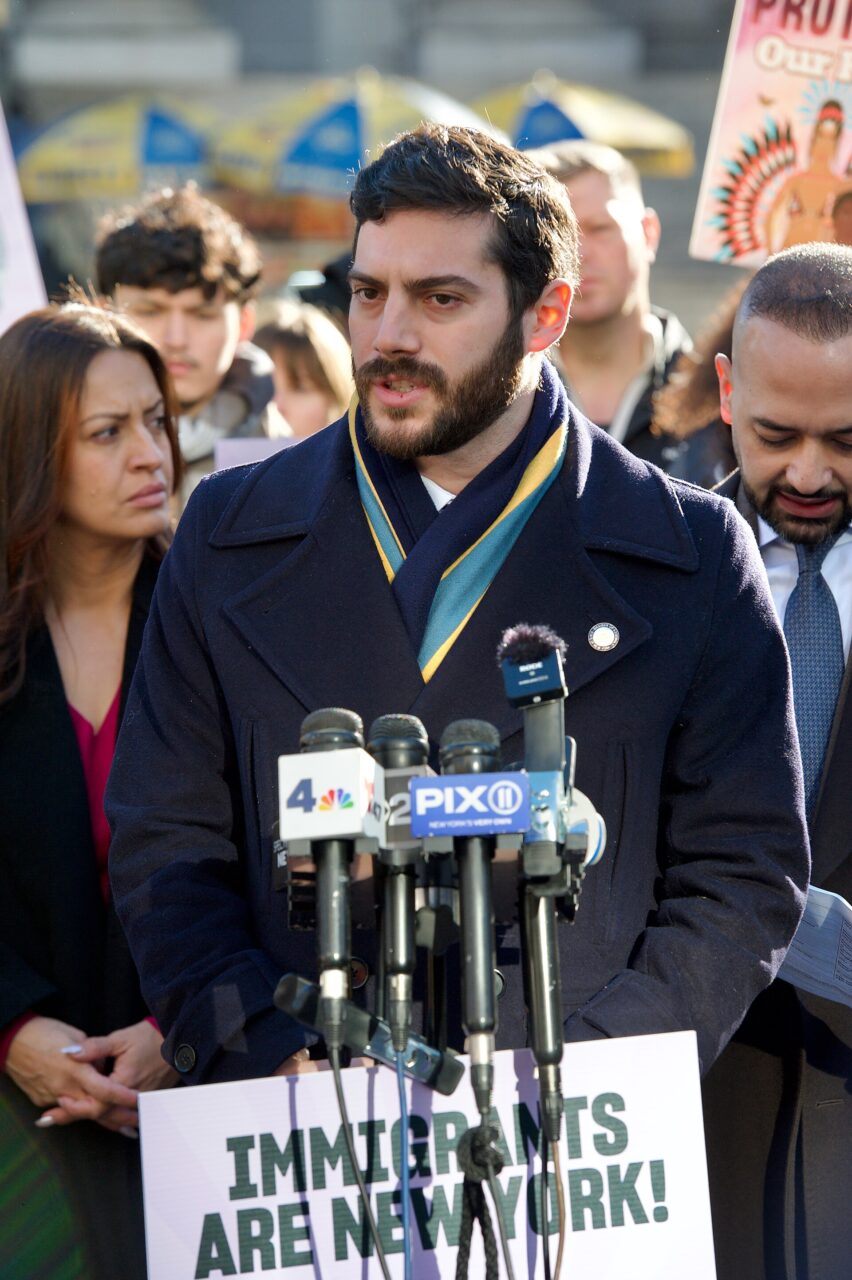
New York Assemblymember Alex Bores has launched a $30 million effort to bring Democrats together around a common artificial intelligence regulatory agenda, according to the new organization’s website, as reported by POLITICO.
The group, called Who Decides, was unveiled Tuesday with the stated goal of building a Democratic answer on AI. Its website says the aim is for Democratic candidates by 2028, from the top of the ticket downward, to run on a shared AI safety platform.
According to the announcement, that agenda would address harms people already see as well as broader risks tied to increasingly powerful and uncontrolled systems that could destabilize the economy, democracy and public safety.
POLITICO reported that it was not immediately clear whether Who Decides will be organized as a federal super PAC, a 501(c)(4) nonprofit or another type of entity. The website includes a donation link that redirects to a page hosted by Give Butter, an organization that helps nonprofits raise money. The announcement also says the group will reject corporate money and donations from senior executives at frontier AI companies.
The website says Bores is launching the effort alongside his former chief of staff, Anna Myers. POLITICO added that Bores did not immediately respond to questions Monday night, including whether he had personally raised money for the organization while serving in public office.
The launch comes at a time when AI is becoming a major political issue. POLITICO noted that last week former Anthropic researcher Jacob Coxon warned that artificial intelligence could bring about the end of humanity. That was followed by calls from the leaders of Anthropic and OpenAI, along with Elon Musk, for regulation and a slowdown in development with stronger guardrails.
Politicians in both parties are trying to settle on a policy agenda and message for the fast-moving technology. POLITICO reported that former President Barack Obama last week urged Democrats to focus on AI, while party strategists from across the ideological spectrum gathered to begin mapping out a strategy. President Donald Trump, by contrast, rejected recent Republican and Democratic calls to quickly regulate the industry in social media posts on Monday.
In the launch announcement, Bores argued that a handful of people should not be writing rules for hundreds of millions of Americans, in an apparent reference to top AI executives, and said there was no reason to let them write the rules for artificial intelligence.
The group says it will focus on 11 states it considers central to the 2028 presidential primary and general election: South Carolina, Nevada, New Hampshire, New Mexico, Michigan, Virginia, Arizona, Georgia, North Carolina, Pennsylvania and Wisconsin. According to the website, it plans to conduct quarterly national and state polling, host national conferences and partner with local groups in those states.
POLITICO also recalled that Bores earlier this year lost the primary for the Manhattan seat being vacated by Democratic Rep. Jerry Nadler. His campaign centered heavily on regulating artificial intelligence following his work to pass the RAISE Act in the state Legislature, which sought to create safeguards for the technology. The race drew a combined $21 million from super PACs backed by rival factions within the AI community, which spent both for and against him, POLITICO reported. Democratic Assemblymember Micah Lasher ultimately won the primary and is seen as all but certain to win in November in the heavily Democratic district.
According to the Who Decides website, the political lesson Bores and Myers took from that race was that taking on the AI industry can be fertile political ground and that public demand exists for answers on AI policy, even if it remains scattered. In their view, what is missing is a coalition able to turn that energy into a governing consensus before the technology, the economic disruption and the partisan battle lines harden.
Sources
About this piece. Written by El Notero with AI assistance, from reporting published by the outlet cited above. El Notero did no original reporting on this story.