Miami
Eight Republican-led states redraw districts and focus on the Hispanic and African American vote
According to La Vanguardia, the changes pushed in several states seek to preserve the Republican majority in the House of Representatives. In Texas, the new map sharply alters urban and suburban districts to combine those voters with conservative rural areas.
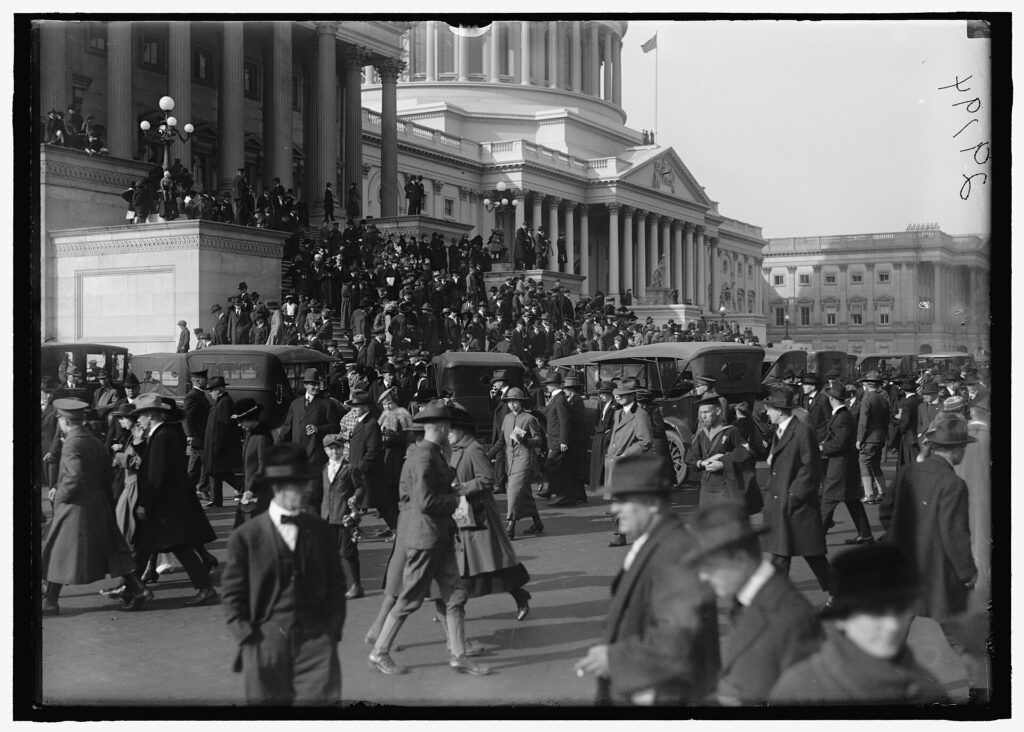
Several states controlled by the Republican Party moved ahead with a new round of redistricting in the middle of the decade, a maneuver that, according to La Vanguardia, aims to preserve control of the House of Representatives in the next midterm elections.
According to that outlet, changes were approved in Texas, Louisiana, Florida, Ohio, North Carolina, Tennessee, Alabama and Missouri, although in the latter case the courts blocked the new map. The initiative followed the push from Donald Trump, in a context of polls that forecast difficulties for his party in Congress.
The case of Texas stands out as one of the most relevant. La Vanguardia noted that District 32, in the Dallas area, stopped concentrating on an urban and suburban zone and extended more than 160 kilometers eastward to incorporate rural, white and conservative counties. In Garland, where Hispanics and African Americans together account for 65% of the population, the change dilutes the electoral weight of those communities.
According to La Vanguardia, Texas Republicans are seeking to gain five new seats in the lower chamber through the redistricting. In that context, the new outline of District 32 puts at risk the seat currently held by Democrat Julie Johnson.
The Spanish newspaper recalled that redistricting is usually done after each census, on the grounds of adjusting representation to demographic changes, although the party governing each state often takes advantage of the process to strengthen its majorities.
Mark Jones, professor of Political Science at Rice University, told La Vanguardia that “Texas opened Pandora’s box” and said the Supreme Court “paved the way.” The newspaper linked that reading to a ruling in late April that weakened a central point of the 1965 Voting Rights Act, by striking down a Louisiana map because it created a majority-Black district.
After that decision, still according to La Vanguardia, Louisiana Republicans approved a new map with which they hope to win a seat now held by Democrats. In Texas, the ruling also enabled changes in districts in Dallas and Houston: in one, the Hispanic majority vote was diluted and in another, two African American districts were merged.
Jones also warned La Vanguardia that not all Republican calculations would be safe. He said that in three districts in southern Texas there was a risky bet on the future behavior of the Latino vote and stated that, of the five seats the party expects to win in that state, only two currently appear secure.
La Vanguardia added that something similar could happen in Florida, Ohio and North Carolina, where there are districts designed to be favorable to Republicans but that remain competitive. In that scenario, the outlet underscored that the Republican Party maintains a narrow majority in the House of Representatives, with 218 seats to 214 for Democrats.
Sources
About this note. Written by El Notero with the assistance of artificial intelligence, based on what was published by the cited outlet. El Notero did not conduct its own reporting on this event.