Argentina
The Government sent a bill to the Chamber of Deputies that toughens sanctions for unauthorized activities in the Malvinas
The initiative expands the scope of legislation on natural resources in the islands and creates a National Security Council. It also introduces changes in defense, political financing, cyberintelligence and critical infrastructure.
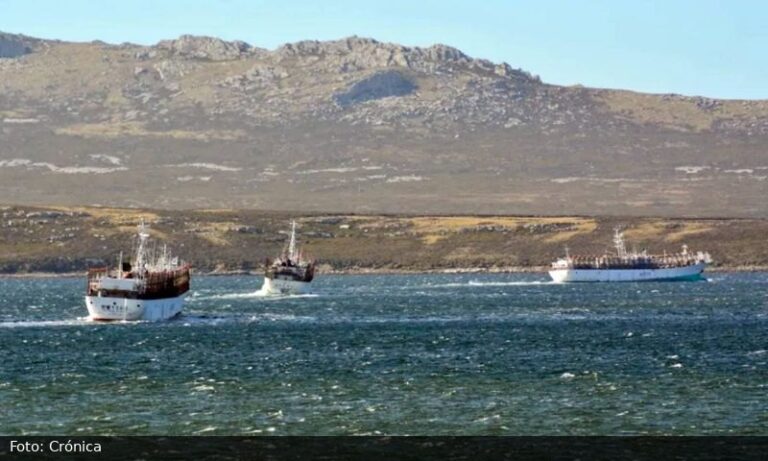
The Executive Branch presented in the Chamber of Deputies a National Sovereignty Defense Bill that redefines the regime over the Malvinas Islands, the Argentine Continental Shelf and other areas under Argentine claim. According to Crónica, iProfesional and C5N, the proposal expands sanctions for the unauthorized exploitation of natural resources, creates a National Security Council and adds new tools to confront external threats.
One of the central changes is the replacement of Law 26,659 with a broader scheme, which is no longer limited to hydrocarbon activity but extends to all natural resources, renewable and nonrenewable. According to the cited media, the bill also extends responsibility not only to direct operators, but also to suppliers, partners, shareholders, controlling entities and other persons or entities that make those activities possible.
The text provides for fines, disqualifications and prison sentences. Crónica and C5N reported that administrative fines would range from the equivalent of 4,000 to 500,000 barrels of oil, while prison terms could reach up to 20 years depending on the type of conduct. Sanctions are also contemplated for legal entities, such as suspension from contracting with the State, revocation of licenses, loss of benefits and, in some cases, dissolution.
According to Crónica, the initiative also authorizes trials in absentia for the crimes covered by this regime. iProfesional specified that this tool was already incorporated into the Argentine criminal system by Law 27,784.
The bill provides for the creation of a National Security Council under the leadership of the President of the Nation. According to iProfesional and Crónica, that body would bring together the chief of staff, the ministers of Foreign Affairs, Defense and Economy, along with authorities from SIDE and the Legal and Technical Secretariat, with coordination functions in diplomatic, economic, military, legal, cyber and intelligence matters.
Crónica indicated that, in the face of a serious and imminent threat from a foreign actor or state, that council could promote measures such as banking and currency restrictions, temporary blocking of funds and assets, cancellation of licenses and increases in customs duties of up to 75%.
The initiative also regulates protocols for state action in air and maritime spaces. The three media agree that it establishes progressive procedures in the face of aircraft or vessels considered hostile, with the use of force as a last resort and under presidential authorization. In the maritime case, the sinking of a vessel appears as an exceptional measure and could not be used as a sanction or solely to prevent the escape of a civilian vessel.
In defense matters, the bill amends the National Defense Law to allow the intervention of the Armed Forces in the face of external threats of state and non-state origin, including cyberattacks and other non-kinetic aggressions, according to Crónica and iProfesional.
It also introduces prohibitions on foreign contributions to political parties and election campaigns, and creates new criminal offenses linked to the disclosure of state secrets, collaboration with clandestine intelligence operations and disinformation campaigns financed from abroad, according to Crónica and iProfesional.
The proposal would also give legal status to the Public Registry of Persons and Entities linked to Acts of Terrorism and Their Financing, known as RePET. According to iProfesional and Crónica, that would include the possibility of freezing assets and prohibiting transactions with those included in that registry.
Another chapter creates a protection regime for critical infrastructure, both public and private, whose operation is key for areas such as health, energy, telecommunications, transportation, finance and defense. Crónica noted that the text places special focus on the protection of data centers, technological systems and assets whose information would remain under security reserve.
After the bill was sent, Crónica reported that Javier Milei released a public letter in which he asked that the parliamentary treatment of the initiative be prioritized.
Sources
About this note. Written by El Notero with the assistance of artificial intelligence, based on what was published by the cited outlet. El Notero did not conduct its own reporting on this event.