Miami
US governor candidates move to define their positions on AI regulation
Candidates from both parties are increasingly calling for states to play a larger role as Washington stalls on artificial intelligence rules. A campaign debate once centered on data centers is now widening to broader AI risks.
Artificial intelligence is becoming a campaign issue in gubernatorial races across the United States, with Democratic and Republican candidates arguing that states should take a bigger role in setting safeguards as federal action remains limited, according to a POLITICO survey.
POLITICO reported that most of the candidates who answered its questions said state governments should lead on AI oversight. The concerns they cited ranged from fraud and job losses to children’s safety.
The outlet said that marks a shift from earlier campaign messaging, which had largely focused on the effect of data centers on energy prices. With Election Day approaching, more candidates are trying to address AI as a broader and more far-reaching issue.
In Texas, Democratic nominee Gina Hinojosa argued that the federal government has failed to lead and that AI cannot be left to self-regulation by the business figures profiting from it. Her Republican opponent, Greg Abbott, did not respond to POLITICO’s questions.
In California, Democrat Xavier Becerra, who POLITICO described as heavily favored to succeed Gavin Newsom, is speaking with technology industry leaders and economists about possible next steps. Through spokesperson Jonathan Underland, he said he would seek firm guardrails to prevent harms to workers, children, privacy rights and public safety. His Republican rival Steve Hilton told POLITICO there is room for narrow AI regulation, while also arguing that some warnings about the technology are overstated.
In Oregon, a spokesperson for Democratic Gov. Tina Kotek said that while regulation would be strongest at the federal level, states must move more urgently in the meantime. In Wisconsin, Democratic nominee David Crowley told POLITICO that AI safety is an issue the state can address, though he also called for leadership and partners in Washington. According to the outlet, Tom Tiffany, his Republican opponent, and several other candidates in different states did not respond to requests for comment.
Support for state-level action is not limited to Democrats. In Iowa, a spokesperson for Republican nominee Zach Lahn told POLITICO that states should have a say in how AI is regulated. In Georgia, a spokesperson for Republican nominee Rick Jackson stopped short of explicitly calling for local regulation, but said he supports efforts to test new models for risk and establish safety standards, while also working with the state legislature to protect consumers from AI-driven scams.
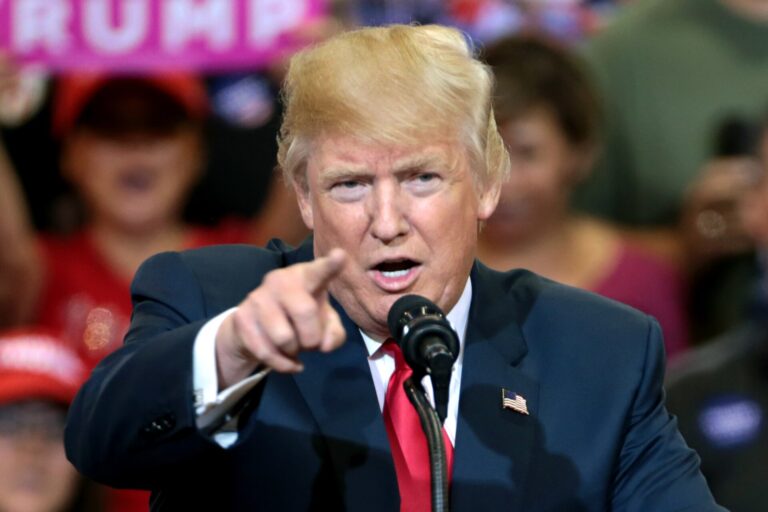
POLITICO said the debate is also unfolding against the backdrop of the White House position. Donald Trump has dismissed concerns about AI as an existential threat, and his administration has pushed to preempt state-level regulation. In February, the White House urged Utah lawmakers to drop an AI transparency bill, and it has also challenged state legislation in Colorado and California.
A POLITICO review of state legislation found 18 laws in 13 states, backed by both Republicans and Democrats, that conflict with the White House’s preemption approach. At the same time, the National Governors Association, which earlier this year convened a working group on AI’s impact on the workforce, plans to release a policy roadmap in November for governors looking to act at the state level.
The outlet also noted that sitting governors are already weighing in. This week, Spencer Cox called on Washington to establish a consistent national framework for frontier AI, while Josh Shapiro said at a conference in Pittsburgh that the federal government should regulate the AI industry as it does other sectors that significantly affect everyday life.
Sources
About this piece. Written by El Notero with AI assistance, from reporting published by the outlet cited above. El Notero did no original reporting on this story.