Uruguay
Orsi, Oddone and the World Bank highlighted a reform agenda for competitiveness in Uruguay
At an event marking 80 years of ties between Uruguay and the World Bank, national authorities and the institution underscored the value of multilateralism and the push for microeconomic changes. The World Bank’s vice president for Latin America and the Caribbean, Susana Cordeiro, praised the parliamentary progress of the competitiveness bill.
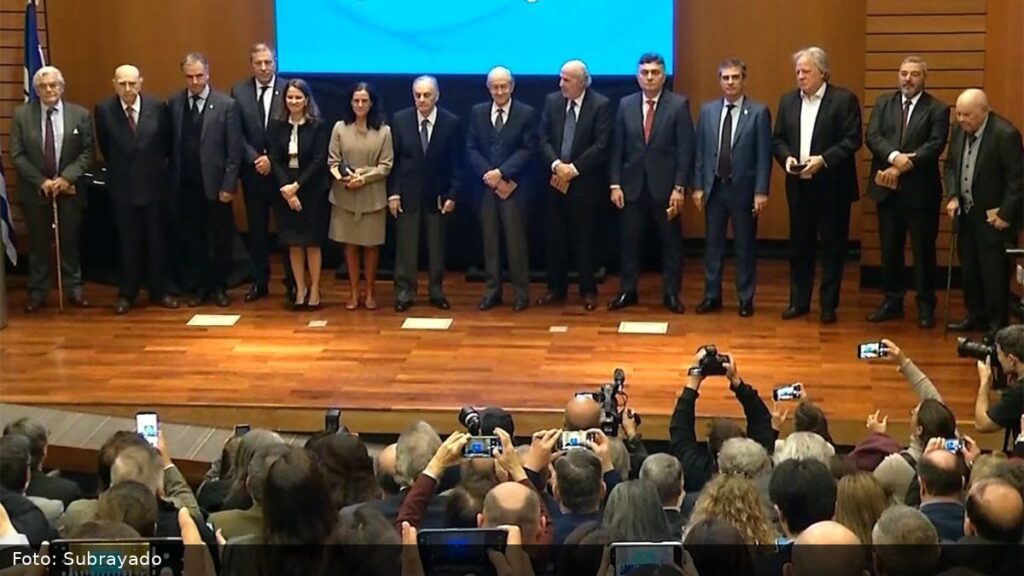
President Yamandú Orsi led the ceremony this Monday marking 80 years of the relationship between Uruguay and the World Bank and described it as recognition of a historic commitment by the country, according to Subrayado.
During the event, the president recalled that Uruguay was among the first members to join the proposal that emerged in the postwar period and reaffirmed his defense of multilateralism. He also thanked Enrique Iglesias for his presence at an event attended by former presidents and former ministers of Economy and Finance.
Orsi also noted that the country must continue sustaining the achievements of that period and reviewed that the first agreement with the institution, in the 1950s, was linked to the expansion of the electricity grid and telephone service.
For his part, the Minister of Economy and Finance, Gabriel Oddone, said that Uruguay is now focused on microeconomic reforms to accelerate growth and improve competitiveness. According to Subrayado, he said that this path is possible thanks to prior work on macroeconomic stability and the building of international trust.
In the same vein, the World Bank’s vice president for Latin America and the Caribbean, Susana Cordeiro, said that competitiveness involves human capital, technology, financing, infrastructure, openness and innovation, and stressed that these factors must reinforce one another.
Cordeiro considered the presentation of the bill on competitiveness and lower cost of living promoted by the Executive Branch to be a step forward. According to Subrayado, she especially highlighted the simplification of procedures, trade facilitation, the promotion of competition, innovation and investment. She also said that its approval in the Senate represents a positive signal and argued that the discussion is moving from diagnosis to a concrete reform agenda.
The World Bank official also underscored Uruguay’s tradition of dialogue and consensus-building, and said that this characteristic must be preserved as a strength.
Sources
About this note. Written by El Notero with the assistance of artificial intelligence, based on what was published by the cited outlet. El Notero did not conduct its own reporting on this event.