Argentina
Disability Opens a New Front of Conflict for Milei in Congress, the Judiciary and With His Allies
The ruling party suffered parliamentary setbacks, faces judicial claims over the emergency, and adds tensions with Pro, the UCR and governors. In addition, a case over alleged irregularities at the former Andis reaches the presidential circle.
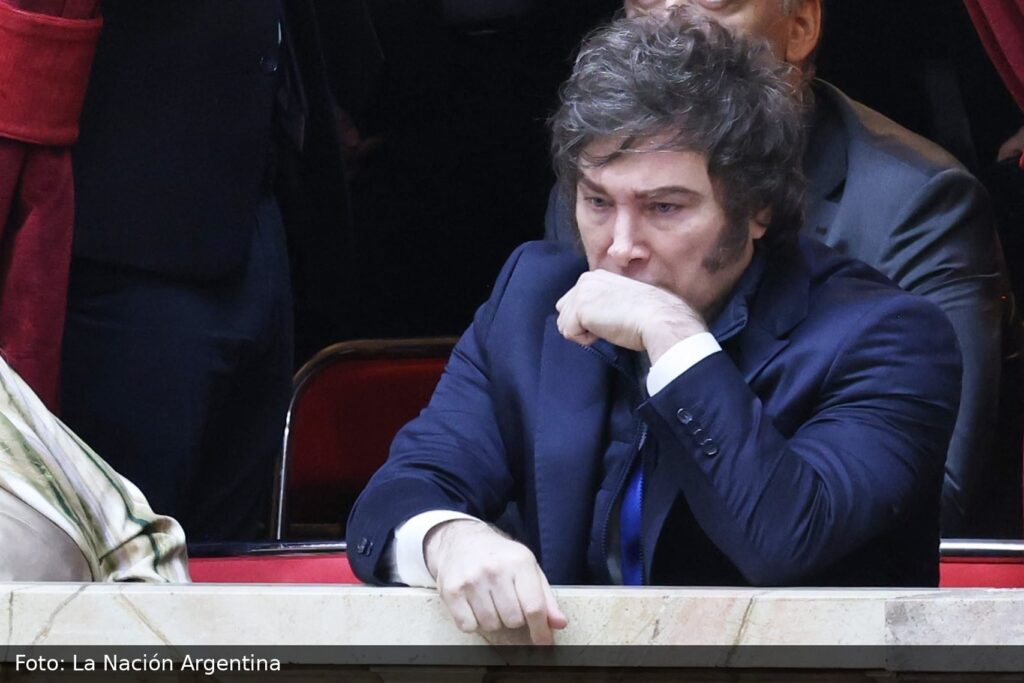
Disability policy has become a source of strain for the government of Javier Milei, with simultaneous consequences in Congress, the courts and its relationship with sectors that usually back him. According to La Nacif3n, the ruling party has already accumulated seven adverse votes on this issue, including legislative insistence against a presidential veto.
The issue again heightened tensions this week in the Chamber of Deputies, when the opposition pushed a session to move forward with an extension of the disability emergency and with initiatives linked to families’ debt. According to La Nacif3n, the government first tried to defuse the debate in committees and then sought to keep allies and governors from providing a quorum. But faced with the possibility of defeat, La Libertad Avanza changed its position and ended up backing the motions promoted by the opposition.
The emergency had already left the ruling party in the minority last year. Still according to La Nacif3n, the law was approved in the Chamber of Deputies with 148 votes and then passed in the Senate with 55 affirmative votes, no rejections and Libertarian absences. After Milei’s veto, the majorities grew: the Chamber of Deputies insisted with 172 votes in favor and the Senate rejected the veto with 63 votes to seven. In that process, sectors of Pro and the UCR that had initially supported the government began to distance themselves.
The conflict also reached the courts. La Nacif3n reported that, through decree 681/2025, the Executive Branch enacted the emergency law but suspended its application on the grounds that it had no clear sources of funding. That prompted injunctions from families and providers, and even requests before the federal judge in Campana, Adrie1n Gonze1lez Charvay, for him to impose financial sanctions on the chief of staff for noncompliance. Finally, in February of this year, the Executive Branch regulated the law.
The debate remains open. Families are calling for a new extension because they believe Article 13 has still not been complied with, as it provides for compensation to providers for inflation between December 2023 and December 2024. They also argue that nearly 30% still needs to be added to the fee schedule base. The government rejects that interpretation. In the latest session, Libertarian lawmaker Silvana Giudici said the emergency has been fulfilled and cited a ruling by the Federal Court of Appeals of San Martedn indicating that implementation of the law is underway, according to La Nacif3n.
The differences are also affecting allies. Pro publicly called for a clear payment schedule for providers, and its bloc leader, Cristian Ritondo, reiterated that request on the floor, La Nacif3n reported. The UCR, for its part, questioned the ruling party’s strategic shift. In addition, several governors whose lawmakers usually vote with the government also distanced themselves, among them Osvaldo Jaldo, Rafal Jalil, Gustavo Se1enz, Rolando Figueroa, Maximiliano Pullaro and Martedn Llaryora. In provincial blocs, they explain that when the national government does not cover services, part of that demand ends up being absorbed by provincial hospitals and institutes.
At the same time, the area was drawn into a judicial case in Comodoro Py over alleged overpricing and steering of tenders at the former National Disability Agency, now converted into the National Disability Secretariat. According to La Nacif3n, the case implicates the presidential general secretary, Karina Milei, and Eduardo c2abLulec2bb Menem.
Last week, that outlet added, federal prosecutor Franco Picardi summoned Nadia Beller as a witness, who says Fernando Cerimedo, a former adviser to Milei, told her that Karina Milei was involved in the events under investigation and that he has recordings to back it up. The testimony was set for September 23 and will take place by videoconference. The case had begun in mid-last year, after the release of audio recordings in which a voice attributed to Diego Spagnuolo, then head of Andis, spoke of alleged irregularities at the agency and mentioned Karina Milei and Eduardo c2abLulec2bb Menem, always according to La Nacif3n.
Sources
About this note. Written by El Notero with assistance from artificial intelligence, based on what was published by the cited outlet. El Notero did not do its own reporting on this event.