Argentina
The Senate took a step toward changing gas subsidies in cold regions
The governing party secured a majority report for a bill that has already passed the lower house. The initiative limits the general benefit in part of the areas added in 2021 and targets it according to socioeconomic vulnerability.
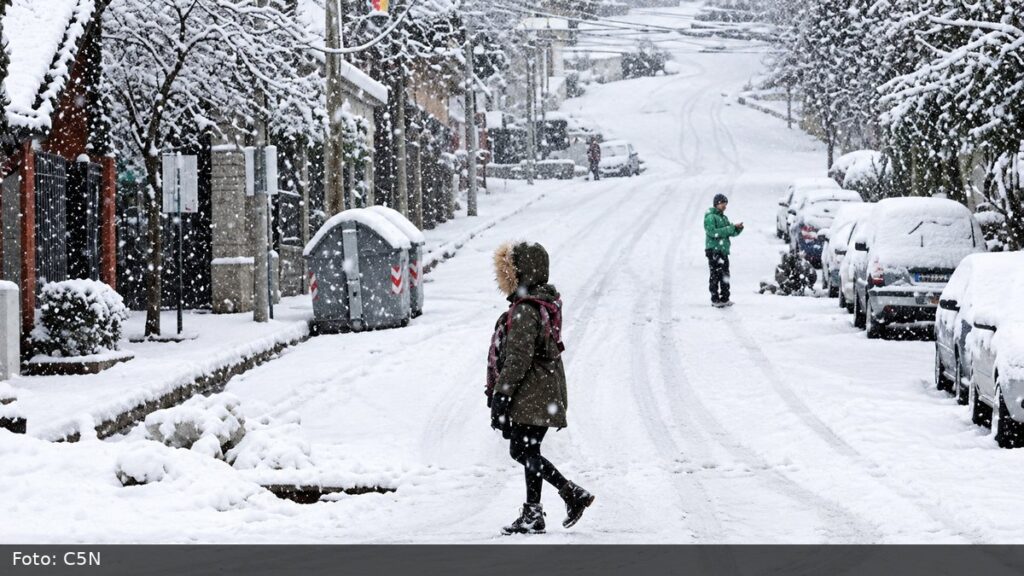
The governing party secured in the Senate a majority report to move forward with the reform of the gas subsidy regime in cold regions, an initiative that already has half of the approval of the Chamber of Deputies and must now be debated on the floor of the upper house.
According to the bill discussed in a plenary session of the Mining, Energy and Fuels and Budget and Finance committees, the scheme partly replaces the geographic criterion with a segmentation based on the socioeconomic vulnerability of households. The proposal keeps the general benefit for Patagonia, Malargüe and the Puna, while in the areas added in the 2021 expansion access will be limited to users who can prove lower incomes or other conditions set out in the Targeted Energy Subsidies scheme.
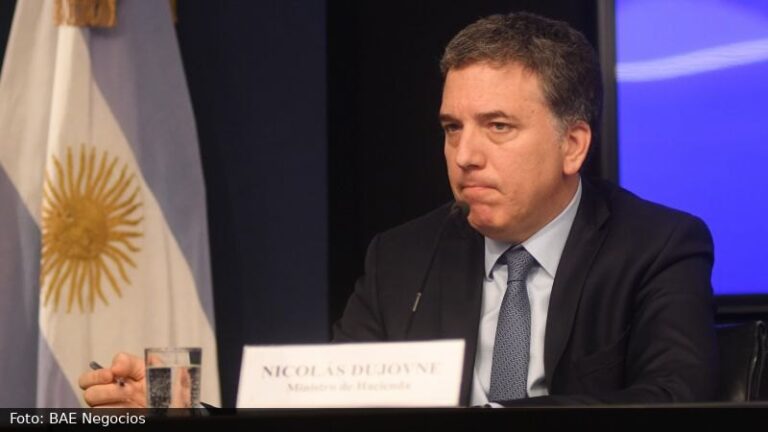
During the debate, Energy Secretary María Carmen Tettamanti took part and questioned the 2021 expansion, arguing that subsidies should be concentrated on the sectors with the greatest difficulty paying their bills. She also argued, according to reports by C5N and Infobae, that there are differences in consumption between Patagonia, temperate areas and other provinces without subsidies.
According to the consistent information, for temperate and intermediate areas, households with monthly incomes equal to or below three Total Basic Baskets for an INDEC type 2 household will be eligible for the benefit, equivalent to $4,400,000 for a family of four. Automatic access is also contemplated for households with a Lifetime Pension for Malvinas Veterans or with a Family Housing Certificate from ReNaBaP, while cases with a Single Disability Certificate will be subject to a later review by the Energy Secretariat.
Another key change is that the discount will no longer apply to the total bill and will instead be calculated only on the price of gas. The fixed charge, therefore, will be excluded from the subsidy. Several opposition criticisms focused on that point because of the possible impact on bills.
Senator José María Carambia criticized the bill and described it as an alternative route to raise tariffs. According to C5N and Infobae, Tettamanti rejected the claim that removing the subsidy from the fixed charge would mean a jump in a bill from $315,000 to $500,000. The official also estimated that, on average, those who lose the subsidy in temperate areas would face a monthly increase of about $15,000, while in cold regions the average increase would be $25,000.
La Nación reported that Senator Flavia Royón said the report came out unchanged from the text approved in the Chamber of Deputies. If the Senate passes it in that form, the bill will become law; if amendments are introduced, it will have to return to the lower house.
In addition to the tariff issue, the initiative extends the renewable energy incentive regime until 2045 and incorporates a mechanism for electricity distributors to regularize debts with CAMMESA, according to C5N and Infobae.
Sources
About this note. Written by El Notero with the assistance of artificial intelligence, based on what was published by the cited outlet. El Notero did not conduct its own reporting on this event.