Uruguay
The port dispute adds a national strike and reaches the Senate
Union rejection of the imposition of minimum services opened a new stage in the dispute at Terminal Cuenca del Plata. The Republican coalition summoned government authorities to analyze the situation.
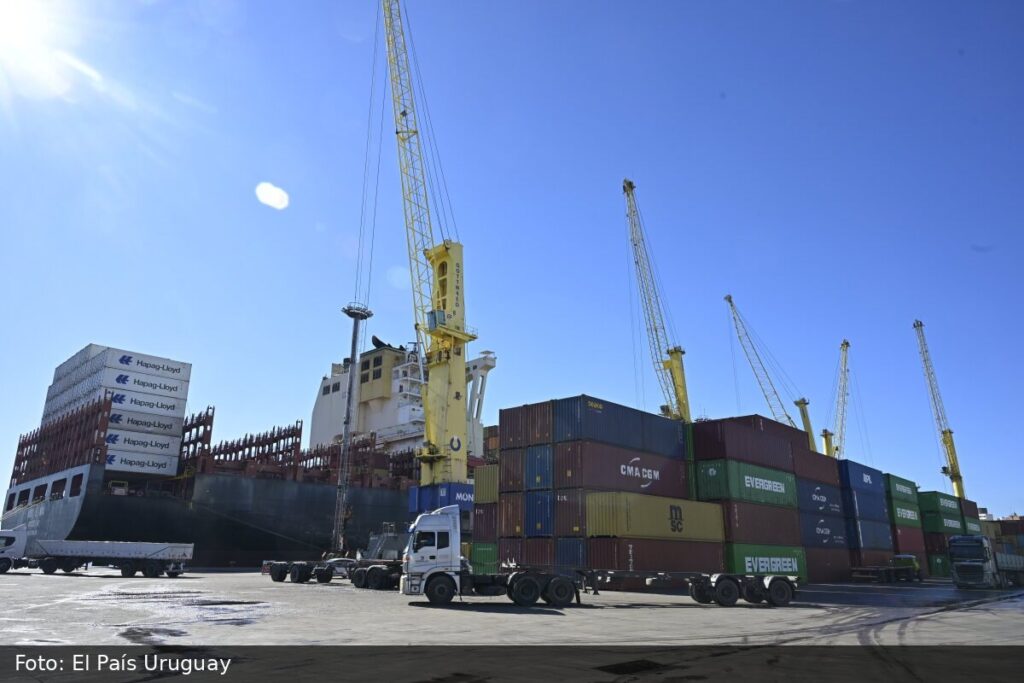
The port dispute in Uruguay added a new escalation after the government’s decision to impose minimum services amid the dispute between the Terminal Cuenca del Plata union and the company over a new collective bargaining agreement, according to El País.
So far, the measures had been carried out by workers at Terminal Cuenca del Plata, but the Single Port Workers and Related Branches Union decided to broaden the protest with a 24-hour national strike, scheduled from 7 a.m. Monday to 7 a.m. Tuesday. According to El País, the resolution was adopted by the union’s national executive and was linked both to the rejection of the minimum services order and to warnings about a possible civil lawsuit over economic losses.
Montecon leader Martín García told El País that the official measure “attacks union freedom” and warned that its effects could extend across the entire sector. Meanwhile, the general secretary of Supra and a TCP union figure, Álvaro Reinaldo, said on Radio Monte Carlo that the decision is “excessive” and argued that, in the case of smaller vessels, the minimum service effectively amounts to 100% of operations.
The controversy also moved into the political arena. The Republican coalition decided to urgently summon authorities from the Ministry of Labor and Social Security and the Ministry of Transport and Public Works to the Senate Transport Committee, El País reported. Senator Javier García said the situation “cannot go on any longer” and questioned the impact of the conflict on competitiveness, employment and the country’s image.
The Colorado Party also voiced criticism. According to El País, the National Executive Committee said in a statement that the government acted “late and badly” and questioned the legal basis for mandatory minimum services. Senator Robert Silva described the situation as of “great seriousness,” said he had “a great deal of concern,” and announced that his party is working on a bill to regulate essential services and minimum services with greater precision.
The background to the dispute remains the collective bargaining process at TCP. According to El País, the company has kept its proposal unchanged for three weeks and the union interpreted its formal submission to the Ministry of Labor, in a meeting without union participation, as a withdrawal from negotiations. Meanwhile, workers maintain that the minimum services order does not solve the underlying problem, which remains the lack of agreement on the contract.
Sources
About this note. Written by El Notero with assistance from artificial intelligence, based on what was published by the cited outlet. El Notero did not conduct its own reporting on this event.